
Cookie Decorating Tools & Materials: What You Actually Need to Start
You don’t need a full setup to start decorating cookies. A small set of tools for cookie decorating beginners is enough to get started decorating cookies at home. You need a minimal set of tools and an understanding of how icing behaves.
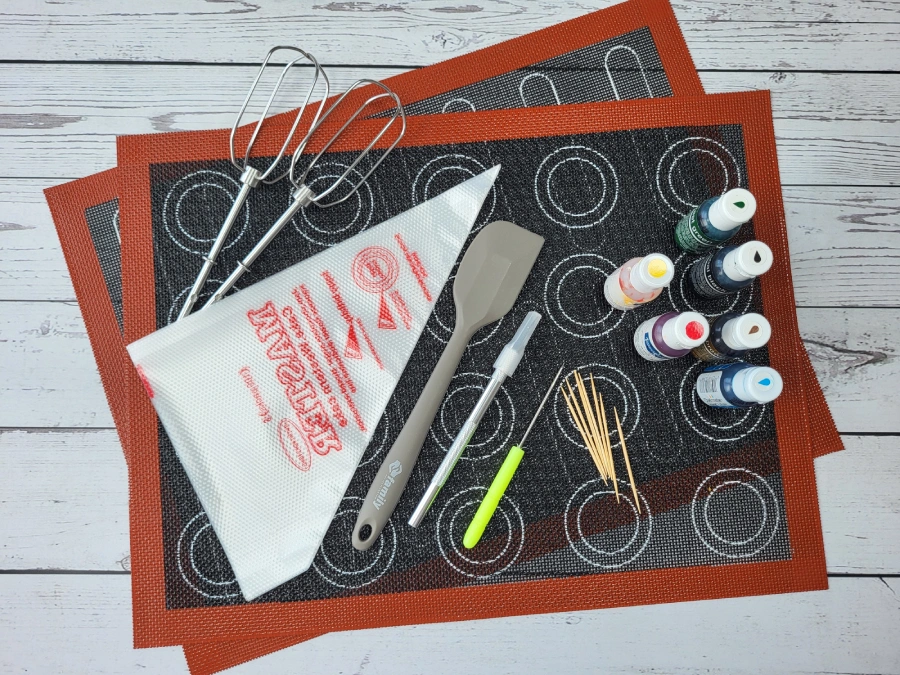
This guide covers the essential cookie decorating supplies you actually need to get started, without unnecessary tools or extra equipment.
Cookie decorating is often presented as something that requires a long list of specialized tools and materials. In reality, most cookie decorating tools are simple, and you only need a small set of basic materials to start decorating cookies with royal icing.
This is not a “buy everything” list. The goal is to help you understand what actually matters at the beginning, what can be replaced, and which tools you can confidently skip.
If you're just getting into cookie decorating for beginners, it’s easy to feel overwhelmed by the number of tools available. It also helps to understand the full process first → how to decorate cookies step by step.
Many tutorials make it seem like you need a full professional setup before you even begin decorating cookies. But in practice, most of those tools are optional.
To start decorating cookies with royal icing, you only need a small group of essential cookie decorating tools - tools that allow you to control icing, shape cookies, and fix small imperfections.
These are the basic cookie decorating tools every beginner should start with.
Everything else is just a convenience or an upgrade. Understanding this difference makes the learning process much faster and far less frustrating.
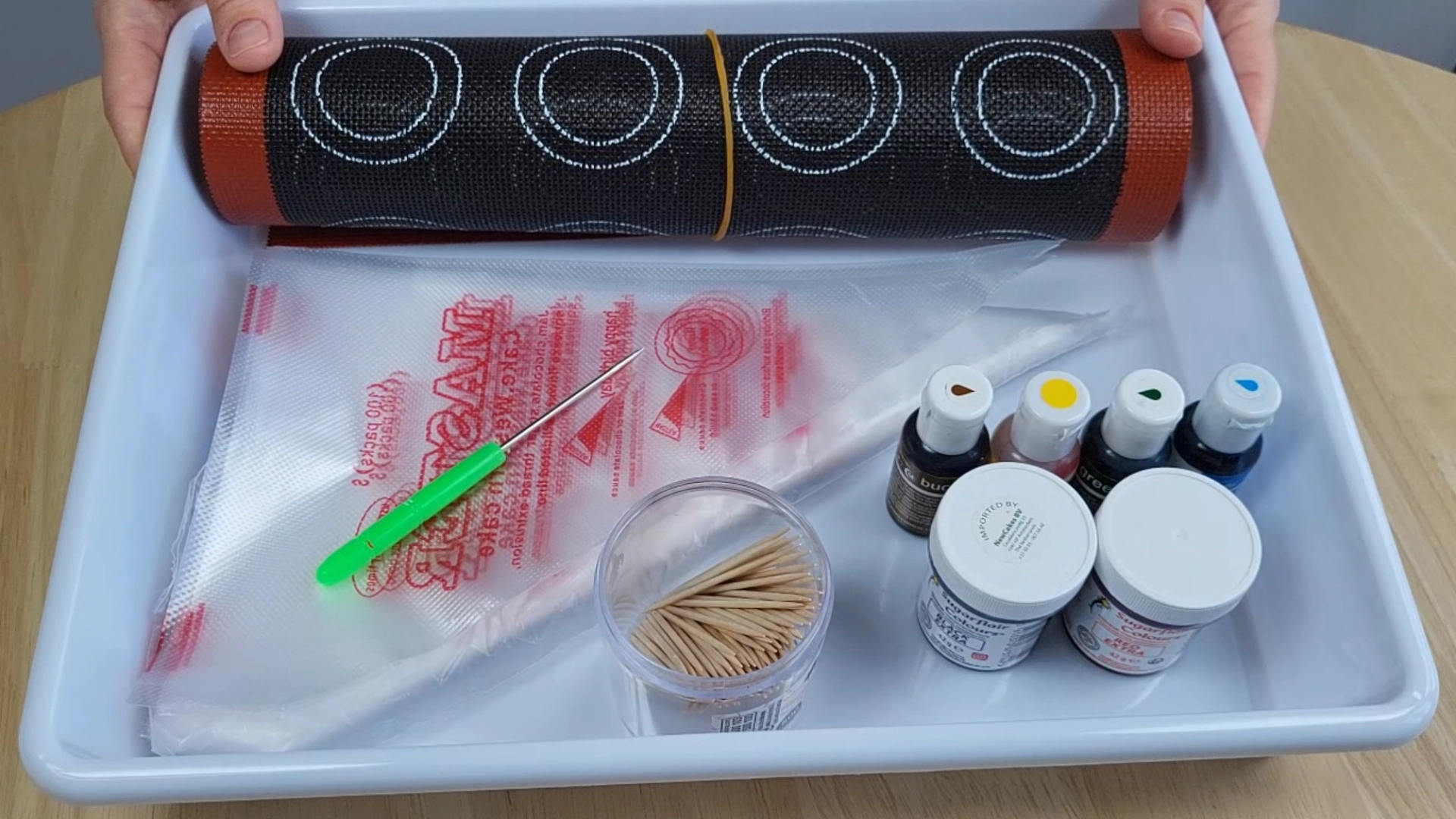
Do You Really Need All These Tools?
One of the most common mistakes in cookie decorating is trying to prepare everything in advance.
It feels logical - buy all the tools first, then start. But in reality, this approach often slows you down.
You don’t need a full setup to start decorating cookies. A small set of tools for cookie decorating beginners is enough to get started. You need a minimal set of tools and an understanding of how icing behaves.
It’s much more effective to begin with a few essential tools for decorating cookies, practice the basics, and only then expand your setup.
Essential Cookie Decorating Tools and Materials
These are the essential cookie decorating tools you genuinely need in order to begin working with royal icing.
1. Piping Cones
Piping cones (also known as piping bags for cookie decorating) are one of the most important cookie decorating tools used when working with icing. Without them, it is almost impossible to apply icing cleanly and precisely.
They are a consumable material, so it is not worth looking for complicated alternatives. It is best to start using them right away.
Without piping bags for cookie decorating, it is very difficult to control icing flow and create clean, consistent lines.
When beginners struggle with cookie decorating, the problem is often not creativity but icing control. To control icing properly, it’s important to understand consistency → royal icing consistency guide.
This is exactly why piping cones are considered one of the most important tools for decorating cookies.

2. Basic Set of Gel Food Colors
Food coloring is a basic part of cookie decorating materials and allows you to create a wide range of designs.
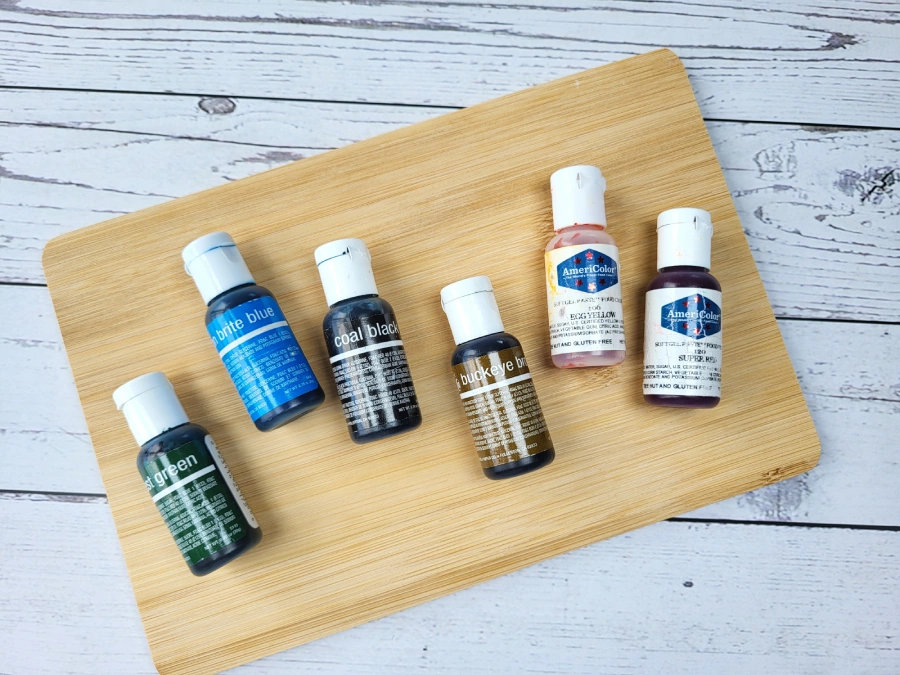
At the beginning there is no need to buy dozens of shades. A simple set of six base colors is enough:
- red
- black
- yellow
- blue
- green
- brown
These colors mix easily with each other and allow you to create most of the shades needed for decorating cookies.
Color control is one of the key parts of cookie decorating. Even simple designs look much more professional when the colors are clean and balanced.
Instead of buying many shades, it is much more useful to learn how to mix colors correctly. This gives you more flexibility and better results with fewer materials.
This set is more than enough for beginners.
Learn how to mix and control royal icing colors
3. Parchment Paper or a Perforated Baking Mat
Either option works well for baking cookies.
At the beginning, it is enough to use just one of them - there is no need to buy everything at once.
The main goal here is not to build a perfect setup, but to have a reliable surface for baking. As long as the dough bakes evenly and releases cleanly, either option is enough.
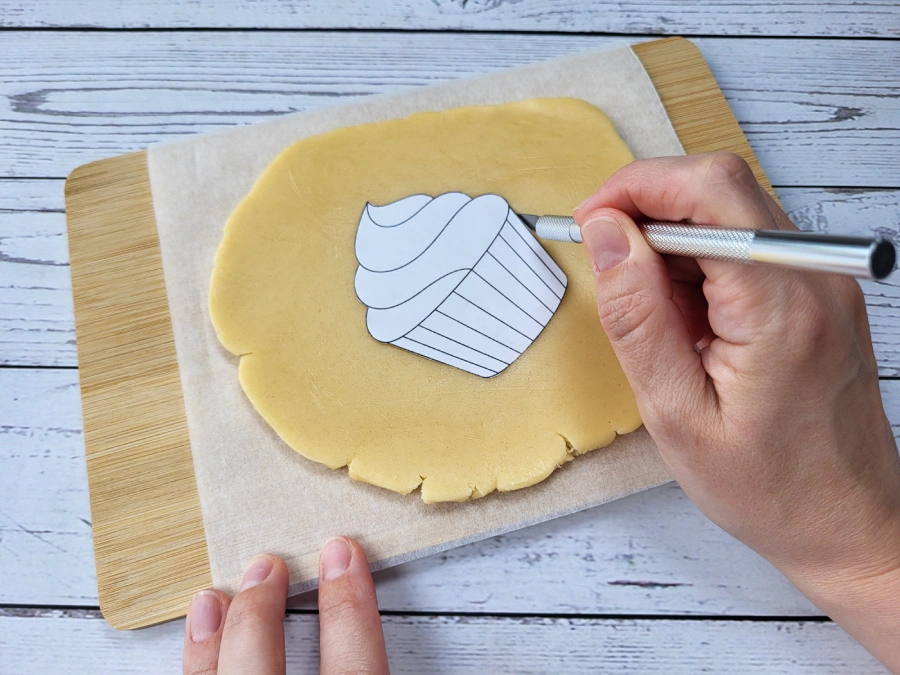
4. Knife
A knife is needed for working with cookie dough. This can be:
- a craft knife with a thin blade
- a small kitchen knife
The most important thing is that the blade is sharp. That is enough for clean and precise work.
Clean cuts matter more than people expect. The cleaner the dough is cut, the easier it is to get even edges after baking, and the easier it becomes to decorate cookies neatly later.
5. Toothpicks or a Scribe Tool
These are essential royal icing tools used when working with icing:
- removing air bubbles
- adjusting icing placement
- smoothing the surface

Simple tools that make the decorating process much easier.
These tools may look minor, but they play a major role in getting a smooth, clean surface. Even small bubbles or uneven icing can affect the final result, especially on larger flooded areas.
Using a toothpick or scribe tool allows you to fix these issues immediately while the icing is still wet.
Which Cookie Decorating Tools Can Be Replaced
These tools can be convenient, but they are not strictly necessary at the beginning.
Cookie Cutters
If you do not have special cutters, the dough can easily be cut with a knife and a paper template.
A simple knife fully covers this task and allows you to create clean, custom shapes without buying extra equipment. For beginners, this is often the most practical way to start.
Learn how to cut cookie shapes without cutters
Turntable
A decorating turntable is convenient, but at the beginning it can easily be replaced with a simple plate.
The important part is being able to gently rotate the cookie while working without touching the fresh icing.
This becomes especially useful when working with flooded icing, where even a small touch can ruin the surface.
Being able to rotate the cookie smoothly helps maintain clean edges and prevents accidental damage.
Rolling Pin with Thickness Guides
This tool helps roll dough to an even thickness. However, if you do not have one, a regular rolling pin works perfectly well.
A rolling pin with thickness guides helps you achieve even dough thickness, which is important for consistent baking.
When cookies have the same thickness, they bake more evenly and create a better surface for decorating.
However, if you don’t have one, a regular rolling pin works perfectly fine. At the beginning, consistency comes more from practice than from tools.
Not Essential, but Useful Over Time
These materials are not necessary at the very beginning, but they gradually become useful as your decorating becomes more advanced.
Brushes
Brushes are useful for painting details and adding fine lines when decorating cookies.
At some point, you will notice that piping alone is not enough to achieve certain effects.
Brushes allow you to soften lines, blend colors, and create details that are difficult to achieve with icing alone.
At the beginning, one thin synthetic brush is enough to get started.
Powder Food Colors
These are used for shading and adding depth to decorated cookies.
Powder food colors are especially useful for adding realism - for example, soft shadows, highlights, or subtle gradients.
Even simple cookies can look much more polished with minimal shading.
For beginners, one or two shades such as pink or peach are usually more than enough.
Packaging
If you plan to gift or sell cookies, packaging improves presentation.
Good packaging also protects cookies from damage during transport and helps preserve their appearance.
Even simple packaging can make decorated cookies look more professional and better finished.
- decorative (bags + ribbons)
- practical (self-sealing bags)
Decorative packaging looks more festive and is a better fit for gifts. Practical packaging is faster, easier to seal, and more convenient when you need to pack many cookies quickly.
Choosing between them depends on your goal: visual presentation or speed and convenience.
How These Tools Work Together
Each of these tools plays a small role, but together they create a complete system.
Piping cones control icing. Scribe tools fix imperfections. Colors define the design. Basic dough tools help shape and prepare the cookies. For a reliable base, use this → sugar cookie recipe for decorating.
When combined, even a simple set of tools allows you to create clean and professional-looking decorated cookies.
That is why the best approach is not to collect tools randomly, but to understand how each one helps at a specific stage of the process.
Once you understand how these tools work together, the next step is learning how icing behaves. Royal icing basics guide
Common Mistakes When Choosing Cookie Decorating Tools
When starting with cookie decorating, many beginners make the same mistakes when choosing tools.
- buying too many tools at once
- focusing on tools instead of technique
- waiting for the “perfect setup” before starting
The result is usually the same - slower progress and more frustration.
In reality, your results depend much more on how you use basic tools than on how many tools you have.
A simple setup used correctly will always give better results than a complex setup used without understanding.
Conclusion
You do not need a large collection of cookie decorating supplies or expensive equipment to start.
A small set of basic materials is enough to begin decorating cookies and creating clean, professional-looking results.
Instead of trying to prepare everything in advance, focus on learning how icing behaves, how to control it, and how to fix small mistakes.
As your skills grow, you will naturally understand which tools you actually need - and which ones you can continue to ignore.
Tools should grow with your experience - not the other way around.
This setup is enough for beginners to start decorating cookies at home.