
Royal Icing Consistency Guide for Cookie Decorating
All working royal icing consistencies start with one base icing: the thick mixture you get immediately after whipping.
This guide explains royal icing consistency for cookies and how to adjust it for different decorating tasks. From that base, you gradually add small amounts of water until the icing reaches the right consistency for the specific decorating task. The goal is not to follow an exact number of drops, but to understand how the icing behaves at each stage.
Different consistencies are used for outlining and flooding. These are commonly called piping consistency and flood consistency in cookie decorating.
If you’re new to icing, see the full royal icing basics guide first. If you need the base mixture itself, start with the royal icing recipe.
Base Consistency
Base consistency is the thickest form of royal icing. This is the icing you have immediately after mixing, before adding extra water.
It is used for lettering, dimensional decorations, and work with piping tips where structure and volume are important.
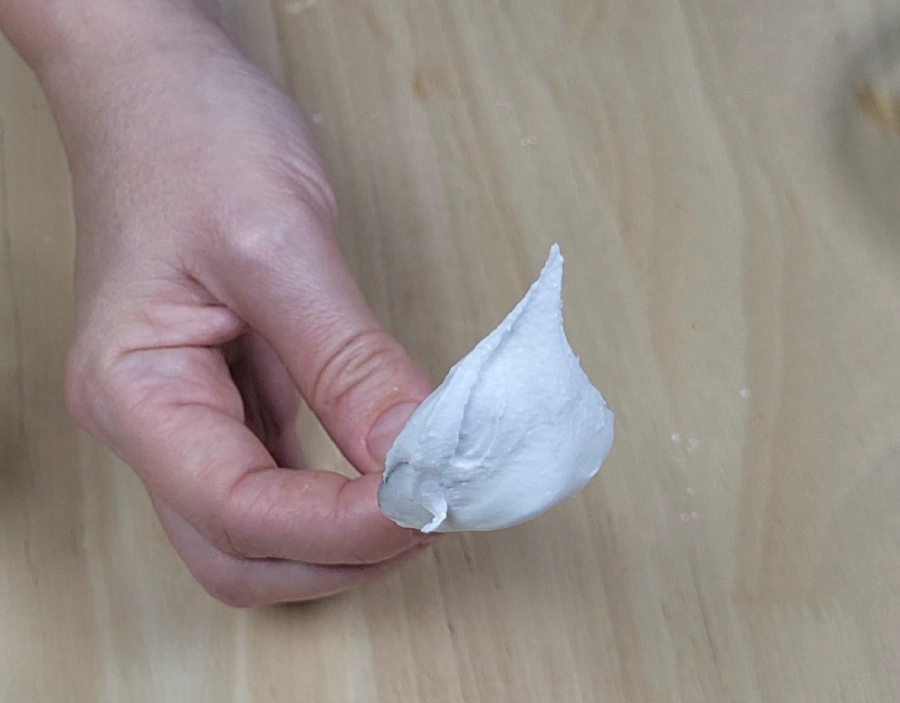
At this stage, the icing forms a stiff peak. The peak does not bend and holds its shape firmly. This is your starting point for all other royal icing consistencies.
Piping Consistency
Piping consistency is made by adding a small amount of water to the base icing.
It is used for outlines, thin lines, decorative elements, and small details such as pom-poms on hats, flower centers, or small hearts.
This consistency holds its shape and does not spread, which gives you precise control over the line. At the same time, it is still too thick for flooding medium or large areas.
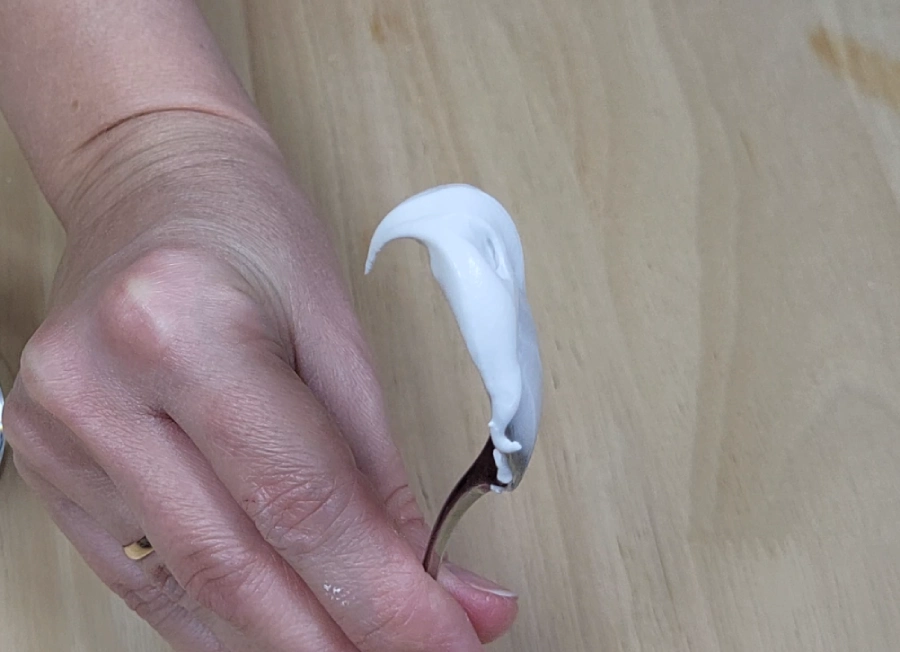
A good sign of piping consistency is that the icing forms a soft peak. The peak still holds its shape, but bends slightly when the spoon is tilted.
If you want to improve control at this stage, practice with piping practice for beginners.
Medium Consistency
Medium consistency sits between piping icing and flood icing.
It is useful for medium-sized details where you do not need volume, but you still need more structure than flood icing can provide.
When applied, this icing does not level on its own. Visible lines and a light surface texture remain. To smooth the layer, the cookie needs to be gently shaken or the icing needs to be guided with the tip of the piping bag.
Without that extra movement, the icing will keep the shape of the lines as they were applied.
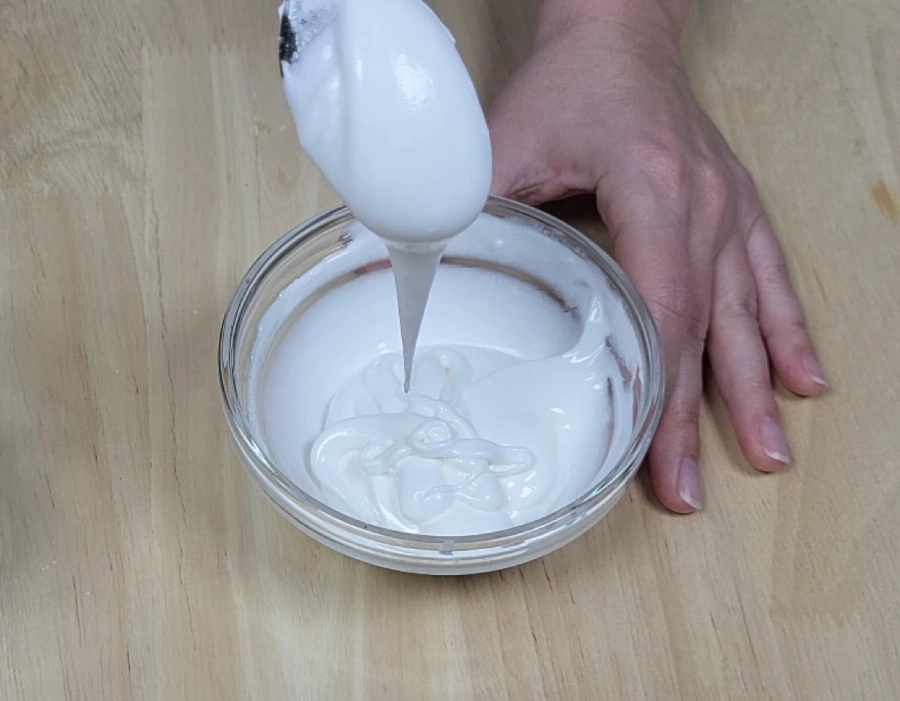
A good sign of medium consistency is that the icing flows from the spoon in a wide ribbon and forms a V-shaped ribbon. The surface does not level immediately, but begins to smooth out with slight movement.
Flood Consistency
Flood consistency (also called flood icing) is the most fluid royal icing used in cookie decorating.
It is used for large decorative areas and background flooding, where the goal is to create a smooth surface quickly and evenly.
When applied, flood icing spreads fast and starts leveling almost immediately. Marks left by the piping tip disappear without additional movement.
Because the surface smooths itself, it is important to work carefully and stay inside the outline.
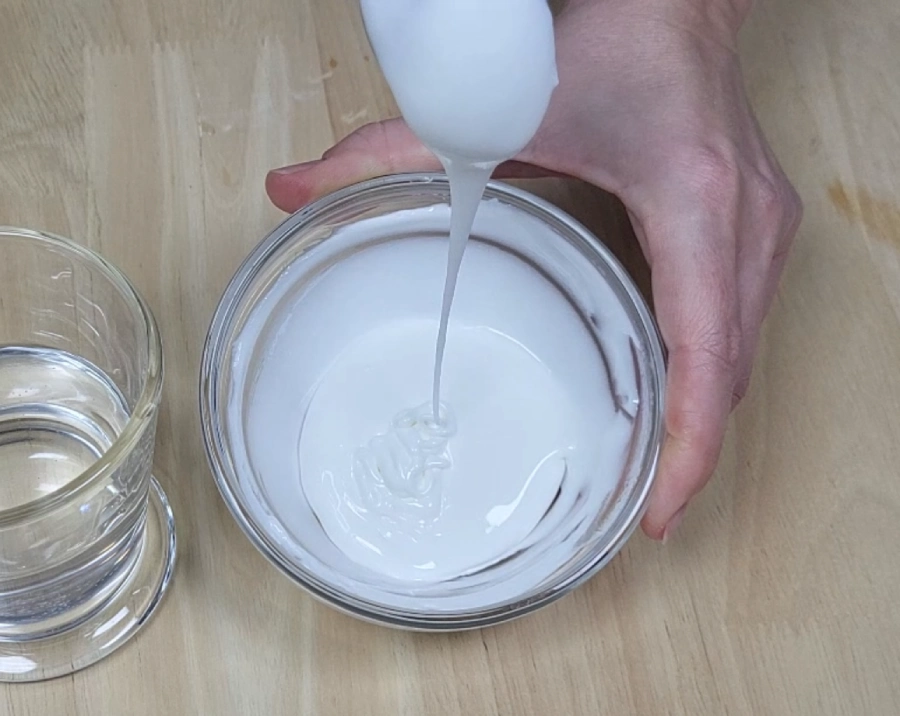
A good sign of flood consistency is that the icing flows in a thin stream and the surface levels almost immediately on its own.
If you want to understand how this fits into the full decorating process, see how to decorate cookies step by step.
How to Adjust Royal Icing Consistency
Water should always be added gradually and in very small amounts. After each addition, mix the icing thoroughly and check the consistency again.
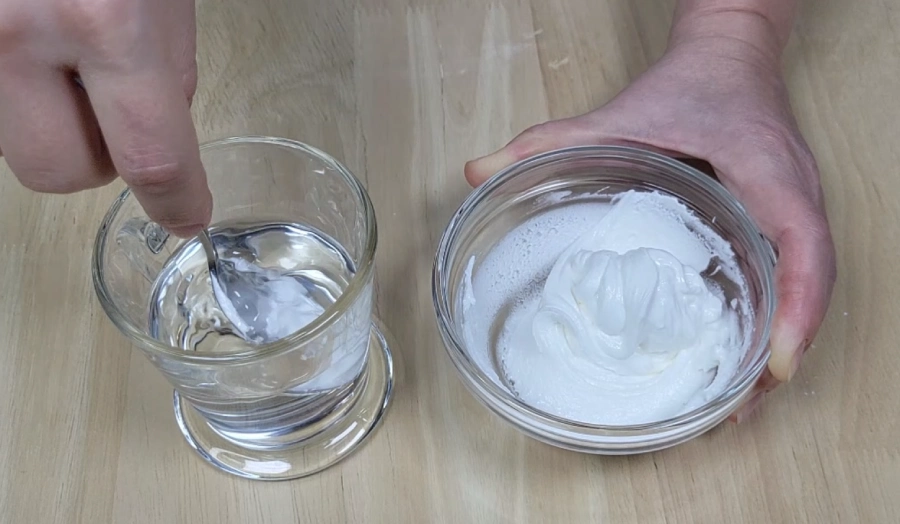
A practical method is to dip a spoon into a glass of water, then add only the small amount of water remaining on the spoon to the icing. Mix well and test the texture again.
This method helps prevent adding too much water at once. It also makes it easier to control the icing by watching how it behaves, instead of relying only on exact measurements.
Important Note About Stored Icing
After being stored in the refrigerator, royal icing can become slightly softer.
Because of that, less water may be needed when adjusting the consistency later. This is important to keep in mind if you are working with icing that was mixed in advance.
You can learn more about storage in the guide on how to store royal icing.
What to Do Next
Once you understand consistency, the next step is applying it correctly.
- Start with the full royal icing basics guide
- Make the base mixture with the royal icing recipe
- Practice control with piping practice for beginners
- See the full process in how to decorate cookies step by step
Royal icing becomes much easier once you stop thinking of consistency as a fixed formula and start treating it as a controlled adjustment based on the task.