
Royal Icing Recipe for Cookies (With Albumin)
This is a reliable royal icing recipe for cookies that produces a smooth, stable texture and consistent results. This royal icing recipe is designed specifically for decorating cookies, where control, structure, and a clean finish matter most.
You can use this as your base icing for outlining, flooding, and adding details. Once prepared, the icing can be adjusted to different consistencies depending on your needs.
If you’re new to working with icing, see the full royal icing basics guide to understand how it behaves and how to use it for decorating.
Ingredients
- 250 g powdered sugar
- 5 g albumin (egg white powder)
- 35 g water
- 1/2 tsp glucose syrup
- 15 g maltodextrin (optional)
How to Make Royal Icing (Step by Step)
Place all dry ingredients into the mixer bowl and whisk them together to distribute evenly.
Add the water and lightly combine the mixture by hand before starting the mixer. This helps prevent dry pockets and improves the final texture.
Whip on medium speed for about 8 minutes. Halfway through mixing, add the glucose syrup.
As the icing develops, it will become thick, smooth, and glossy. After about 8 minutes, it should form a stable stiff peak. This is your base icing.
At this stage, the icing should feel dense, stable, and slightly elastic. This is the foundation for all royal icing consistencies used in cookie decorating.
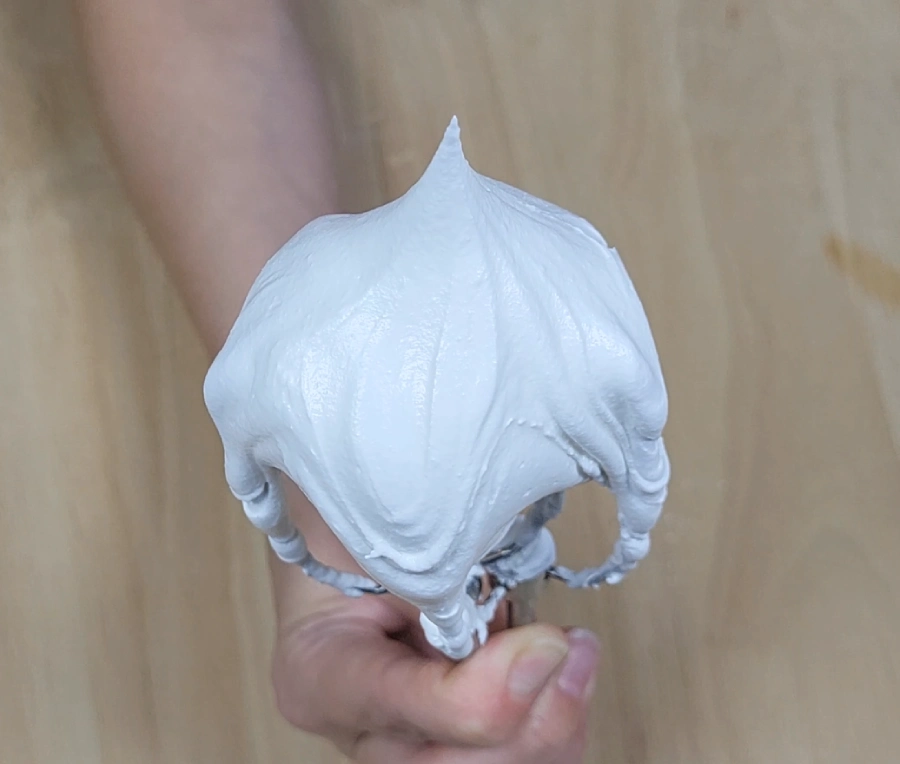
To learn how to adjust this base icing for outlining and flooding, see the full royal icing consistency guide.
What This Icing Should Look Like
A properly mixed royal icing should:
- hold a firm peak without collapsing
- have a smooth, glossy surface
- feel stable, not dry or crumbly
If the icing feels too stiff or too loose, do not try to fix everything at once. Small adjustments and understanding consistency are more important than perfection.
Optional Ingredient: Maltodextrin
Maltodextrin is not required. The icing works well without it.
When added, it can:
- make the texture more flexible
- reduce air bubbles
- lower the risk of cracks
- improve the final surface after drying
If you don’t have maltodextrin, you can simply skip it. For a similar effect, a small amount of cornstarch (about 5 g) can be used, but this is optional.
Why Glucose Syrup Is Used
Glucose syrup helps stabilize the icing and improves how it behaves during piping.
It:
- prevents sugar crystallization
- increases elasticity
- improves control during decorating
If you don’t have glucose syrup, it’s better to leave it out rather than trying to replace it with other syrups, which may change the structure of the icing.
What to Do Next
Once your icing is ready, the next step is to use it correctly.
- Learn how to decorate cookies step by step in the how to decorate cookies step by step guide
- Adjust icing for different tasks in the royal icing consistency guide
- Practice control with piping practice for beginners
This recipe gives you a stable base. From here, everything depends on how you control and apply the icing.